
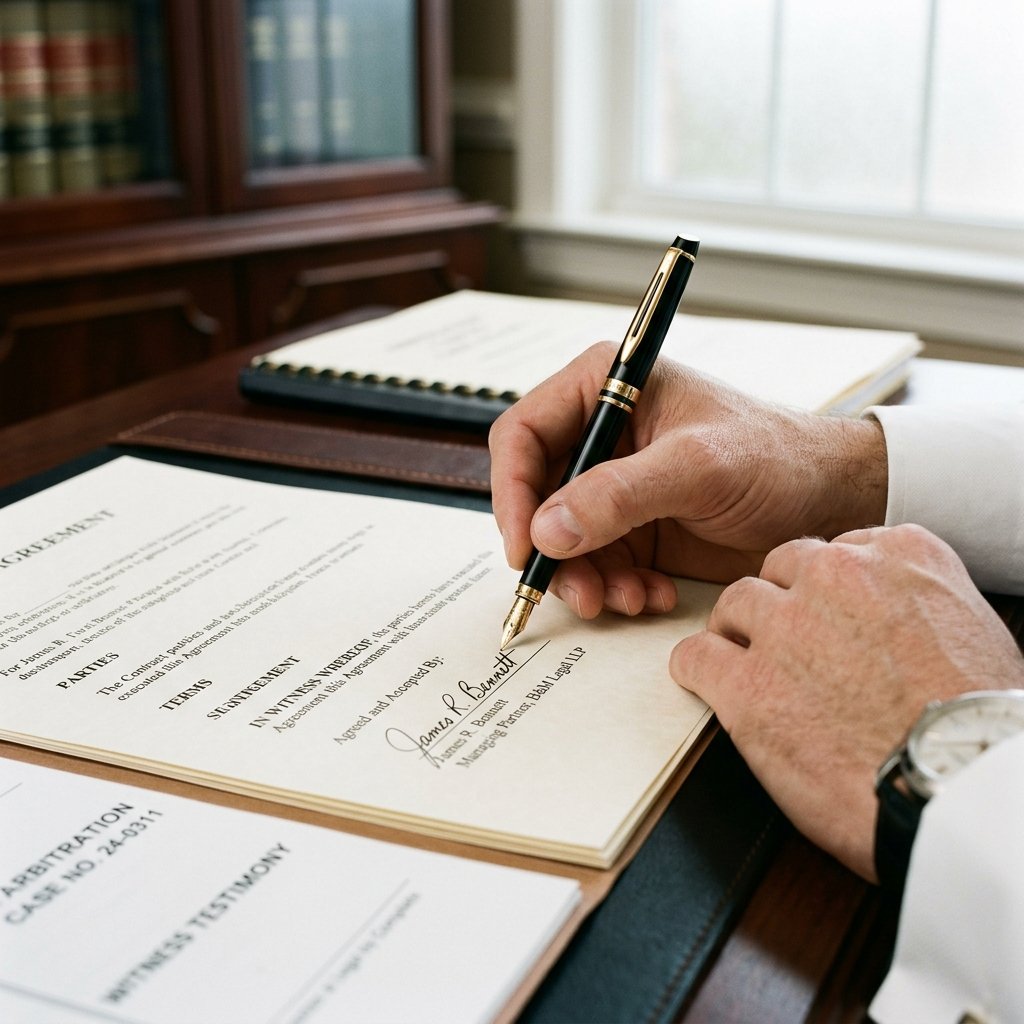

Can Your Employer Legally Change Your Contract Without Consent Under UAE Labor Law?
Here’s a scenario that a lot of workers in the UAE are silently suffering through: you go through the whole recruitment process, get the employment contract signed, and get used to the new job... until one fine day, an email from the HR department informs you about a change in your job title, payment method or working hours. Just like that, no prior conversation, no employee’s approval, only the “company decision” mentioned.
What is left to ask is - is your employer allowed to do that according to the labour law of the UAE?
Short answer: not really.
Long answer: it depends on the circumstances and the manner of executing the changes.
Let’s clarify this in a more understandable way.
Understanding the Basics of UAE Employment Contracts
In the UAE, the employment relationship is primarily regulated by Federal Decree-Law No. 33 of 2021 on the Regulation of Labour Relations, which came into effect in 2022. This new law replaced the previous framework and addressed many issues that employers had previously exploited to their advantage.
Your employment contract is not just a matter of formality. It is a legally enforceable contract that describes the following:
- Job role and responsibilities
- Salary and allowances
- Working hours and leave
- Contract duration and termination terms
After it is signed by both parties, it is not something that can be easily changed. This is where a lot of employees get confused and employers sometimes take advantage of.
During the initial phase of a disagreement, a considerable number of employees contact legal advisors in Dubai just to be informed if the situation is legal or not - and this is typically an intelligent primary move.
Can an Employer Change Your Contract Without Consent?
According to UAE labour law, any substantial modification of an employment contract demands the consent of the employee in writing.
This is not a doubtful matter. The Labour Law Article 8 explicates that modifications to contracts are only permitted if there is agreement from both sides and the changes are documented in writing.
That means your employer cannot legally:
- Reduce your salary without approval
- Change your job role to something entirely different
- Increase working hours beyond what’s agreed
- Remove benefits mentioned in the contract
When any of this occurs against your consent, then it is not only unfair, but it is illegal.
What Counts as a “Material” or Major Change?
Not all minor adjustments become legal cases in the end. UAE law is concerned only with material changes, that is, those changes which have a direct impact on your rights or financial position.
Material changes could be:
- Salary reduction or delayed payments
- Downgrading your position or responsibilities
- Changing work location if it impacts your personal life
- Switching from full-time to part-time style duties
A few minor functional adjustments might be permitted, but as soon as the core terms are altered, consent needs to be obtained. This is the point where the assistance of a legal counselor in Dubai frequently proves to be pivotal in assisting employees in determining whether a modification crosses the legal boundary or not.
What If the Employer Says “It’s Company Policy”?
This is among the most widespread excuses.
Company policies cannot aside federal law.
Although your HR handbook may say that policies are subject to change, they cannot override your signed employment contract. Courts and labour authorities consistently side with employees when employers try to hide behind internal policies.
If the change affects your contract terms, policy doesn’t matter - consent does.
Forced Changes and Constructive Termination
Some employers don’t directly force changes. Instead, they make things uncomfortable until the employee “agrees” or resigns.
This could include:
- Pressuring you repeatedly to sign an amended contract
- Threatening termination if you refuse
- Making your role unworkable after you object
According to the law in the UAE, this can be considered as constructive dismissal, which means that the employer's behavior has effectively forced the employee to leave his or her job.
In these instances, the employee might still be entitled to get compensated, notice pay, and end-of-service benefits. It is generally at this time that individuals begin to seek legal services in Dubai for protection prior to giving resignation in frustration.
What Does MOHRE Say About Contract Changes?
Here, the Ministry of Human Resources and Emiratisation (MOHRE) is very important to everything that is taking place.
Any official amendment to your contract must be:
- Mutually agreed
- Uploaded through MOHRE systems
- Accepted by both employer and employee
If your employer makes internal changes but does not update the MOHRE contract, that is a warning sign. The authorities usually depend on the registered contract in case of disputes.
For this reason, legal consultants in Dubai frequently counsel workers to always have copies of their original contracts, offer letters, and email communication regarding changes.
What Are Your Options If Changes Are Forced?
In case you are dealing with unilateral changes to a contract, you should not feel helpless. Practical steps include:
- Asking for changes in writing and requesting clarification
- Refusing politely but firmly if consent wasn’t given
- Filing a complaint with MOHRE if pressure continues
- Documenting emails, messages, and meetings
You do not necessarily have to escalate things quickly, but silence may be considered acceptance. When an early advice is given by a law firm in the city of Dubai, the problem is avoided in most cases before it tails into firing or non-payment of dues.
Can Employers Ever Change Anything Without Consent?
There are limited situations where minor adjustments may be allowed, such as:
- Temporary operational changes during emergencies
- Adjustments that don’t affect salary or job scope
- Short-term work arrangements agreed verbally
However, such changes as prolonged or permanent ones usually require formal approval even in that case. In case of any uncertainty, one can seek the advice of Dubai advocates and legal consultant professionals in order to understand whether a change should be deemed as safe under the law, or it should be challenged.
What If You Signed Under Pressure?
The most common inquiry made by a large number of employees is that “I signed as I was afraid of losing my job, does this count as consent.”
In the United Arab Emirates (UAE), consent that has been obtained through coercion or misrepresentation can be questioned. The UAE courts and the labour authorities are increasingly examining the way consent was given rather than the existence of a signature.
In case of pressure tactics, skilled Dubai advocates will be able to evaluate the possibility of invalidating the amendment.
Why Early Legal Advice Matters
Employment disputes typically escalate. A simple "small change" can result in unpaid wages, forced resignations, or problems with visas.
Employment disputes typically escalate. A simple "small change" can result in unpaid wages, forced resignations, or problems with visas.
In conclusion
In the UAE your employment contract is not flexible clay for the employers to mold whenever they feel like. It is very clear in law that any significant changes need an employee's consent. If something feels off, it probably is. Do not hurry to sign amendments that are not completely clear to you, and do not think that being quiet is safer than express your concerns.
Call to action:
In case you are dealing with adjustments to your contracts, salaries, or even facing work-related pressure and require legal clarity before new moves, Alqada Claims Recovery Services is the solution that assists you in determining the applicable law and directing you to the most effective solution - all this while keeping the process out of court.