
NFT Ownership Rights Under UAE Law: What Buyers and Creators Should Know
NFTs are no longer something new, at least in the UAE. What is new is how often people end up in disputes because they assumed digital ownership worked differently. Customers believe they have bought complete rights. Artists believe that they have retained absolute power. In between, an element of confusion sets in- and this is typically when lawyers of UAE begin to enter the picture.
To elaborate on this point, we see that NFTs are powerful assets only when you have a clear theoretical understanding of what the law considers ownership and what you are able to do with it.
What an NFT Really Means in Legal Terms
Fundamentally, an NFT is a certificate that you possess a particular digital token that has been registered on a blockchain. That’s it. It does not necessarily imply that you are the owner of the artwork, the music, and the digital file behind it.
According to the UAE legal principles, the NFT ownership and the intellectual property ownership are considered differently. Purchasing an NFT without any license is comparable to purchasing a framed photograph and not possessing the right to the image. This has been overlooked by new buyers who look at the market value of the asset rather than the legal structure.
A legal advisor in Dubai will always ask one basic question before anything else: what rights were actually transferred?
How UAE Law Applies to NFTs Today
The United Arab Emirates lacks a dedicated NFT law yet the country maintains regulations for NFT transactions. The existing legal frameworks which govern digital assets and contracts and intellectual property rights also apply to the assets.
Key laws that often apply include:
- Federal Decree-Law No. 34 of 2021 on Copyright and Related Rights
- Federal Decree-Law No. 45 of 2021 on Personal Data Protection
- UAE Civil Code principles on contracts and obligations
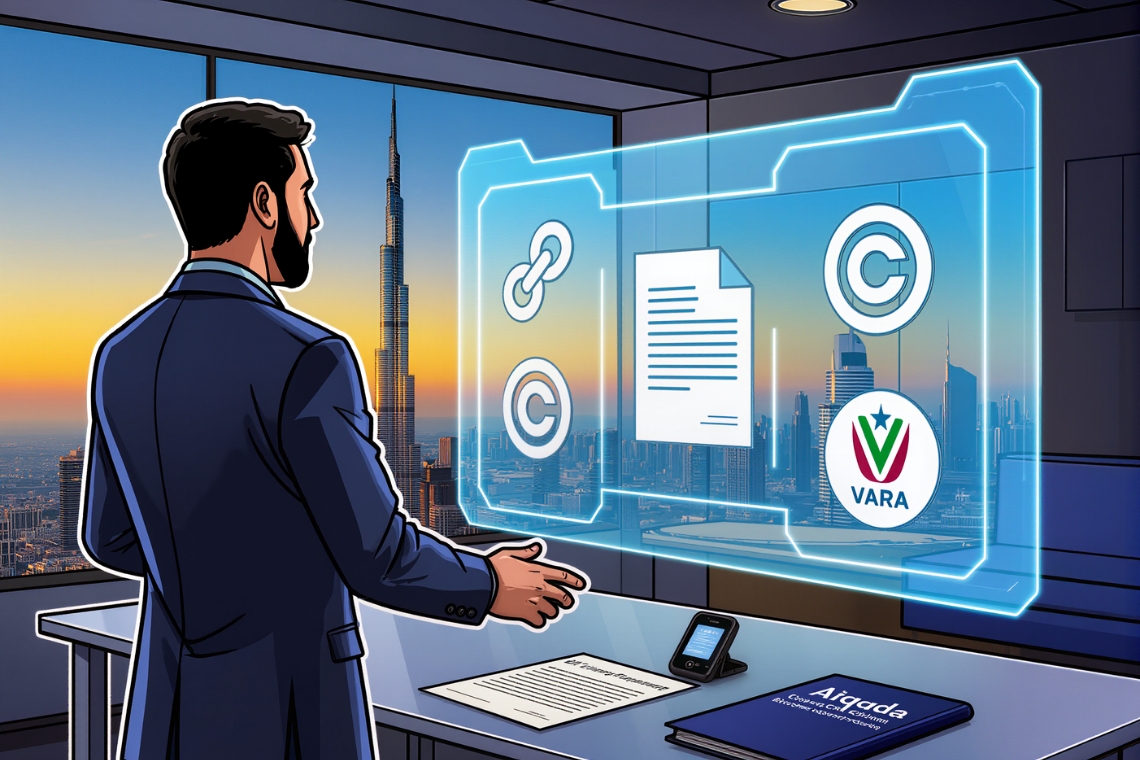
- Dubai’s Virtual Assets Regulatory Authority (VARA) guidelines
The combination of these laws establishes NFTs as digital assets which function according to contractual agreements. Your rights to the asset depend on your agreements which you made when the NFT was minted or sold. The lawyers who provide legal services in Dubai prioritize clear understanding of NFT transactions instead of completing them at fast speeds.
What NFT Buyers Should Check Before Purchasing
Buying an NFT without reading the fine print is like buying property without checking the title deed. You may own something, but not what you thought you were paying for.
Before committing, buyers should look closely at:
- Licensing terms linked to the NFT
- Whether commercial use is allowed
- Any resale or royalty restrictions
- Platform-specific rules
These details are often buried in marketplaces or external links. Buyers who skip them sometimes learn the hard way that resale, branding, or commercial use isn’t permitted. The experienced legal consultants from Dubai who handle this matter can explain what actually happens during the transfer process.
NFT Creators: Your Rights Don’t Vanish Automatically
Creators in the UAE usually retain copyright unless they clearly give it away. Minting an NFT does not cancel your ownership over the original work.
That said, creators still face risks if terms aren’t drafted carefully. Poorly worded licenses can unintentionally grant buyers broader rights than intended. Over time, this can limit how creators reuse or monetize their own work.
Creators should clearly define:
- Whether the buyer gets personal or commercial rights
- If modifications or reproductions are allowed
- How resale royalties are handled
A properly developed contract, which was usually checked by a law company in Dubai, can allow creators to secure their work and, at the same time, receive the profits of NFT sales.
Smart Contracts and Legal Reality
Smart contracts are based on the automation of transactions, however, it does not eliminate legal responsibility. Even in a code-based contract, the contract has to satisfy minimum legal requirements under the law of the UAE.
Here’s where things often go wrong:
- A coding error executes an unintended transfer
- On-chain actions conflict with off-chain agreements
- Parties assume code alone is legally final
Courts do not merely consider blockchain documentation in cases of dispute. They consider intent, documentation and enforceability. That is why the cases of NFT frequently include Dubai advocates and legal consultant professionals who can comprehend the legal interpretation as well as the technical structure.
Jurisdiction and Cross-Border Complications
NFTs original design allows them to pass between different nations but legal conflicts between parties are restricted to particular jurisdictions. When a problem occurs there because of either a failed transaction or a copyright dispute or a conflict about usage rights the first matter which needs resolution is which court has jurisdiction. People are eager to get answers to is which laws are applicable in which country, and where they can possibly file a legal claim.
UAE courts obtain jurisdiction over NFT-related disputes from Dubai when the involved platform operates within the UAE or one party resides in Dubai or the contractual agreement specifies that UAE law governs the transaction. These are the details, which are usually ignored during the time of purchase or minting; they can later determine where and how a dispute can be resolved.
Cross-border NFT disputes do not remain straightforward because their resolution depends on various international elements. The situation becomes more complicated because it takes longer to resolve issues that involve international marketplaces and overseas wallets and foreign buyers. Multiple legal systems will assert their right to jurisdiction which creates obstacles for enforcement. This is why Dubai advocates with experience in international digital asset disputes are often brought in at an early stage-especially for high-value NFTs-so jurisdictional issues are addressed before they spiral into prolonged legal battles.
Common NFT Disputes Seen in the UAE
The most common issues include:
- Buyers claiming broader rights than granted
- Creators alleging copyright misuse
- Platform shutdowns or frozen assets
- Failed or reversed transactions
These conflicts are in most instances solved by either negotiation or organized legal claims instead of being solved by public litigation. Support from established UAE legal services are beneficial to the parties in achieving quicker and smoother results.
Why Legal Clarity Matters More than Hype
NFTs reward speed, but law rewards precision. When excitement drives decisions, rights often get overlooked. When the market cools, contracts are what remain.
Whether you’re collecting, creating, or building a digital asset business, understanding ownership under UAE law isn’t optional anymore-it’s practical risk management.
Conclusion
In the UAE, ownership of NFTs does not mean who first clicks buy. It is who knows what the legal meaning of that click is. Rights, licensing, and obligations live in the details-and those details matter long after the token changes hands.
People who need help with NFT matters and digital asset conflicts can find support from Alqada Claims Recovery Services which provides expert legal guidance together with advisory services in Dubai. Even a short consultancy with us can save you from future problems.