
Dubai Rental Law Explained: What Landlords Can and Cannot Deduct From Security Deposits
One of those things that tenants do not give much thought to are security deposits- until the time to vacate. This is normally the time when emails are not answered, deductions are made without any explanations, and it gets frustrating. This scenario is repeated so frequently in Dubai that rental deposit cases are the most frequent cases that are brought before the courts each year.
The initial counsel given by lawyers in UAE specializing in tenancy issues frequently saves people's money. Nevertheless, even if one is not assisted by a lawyer, knowing how the law of Dubai sees the security deposits makes one stronger from the very beginning.
Why Security Deposit Disputes Are So Common in Dubai
The rental market of Dubai is very dynamic. The tenants are constantly moving in and out, the properties are being sold and sometimes even the essential paperwork gets overlooked. If the expectations are not explicitly communicated at the start, the conflicts at the end become nearly unavoidable.
Many landlords think that the deposit is a kind of insurance that they can use for any minor inconvenience. On the contrary, tenants usually take it for granted that they will receive the entire sum back without any condition. The law, however, is somewhere in between and it becomes quite clear if you read it carefully.
What Dubai Rental Law Actually Says
Security deposits are governed primarily by Dubai Law No. 26 of 2007 as amended by Dubai Law No. 33 of 2008 as well as RERA tenancy regulations. Although these laws do not provide a long list of deductions permitted, they do provide one policy-
Deductions must be associated with the real losses caused by the tenant.
This indicates that the landlord is not allowed to use the deposit as a compensation for the regular use of the property. This is a common explanation by a legal advisor in Dubai in processing tenancy disputes.
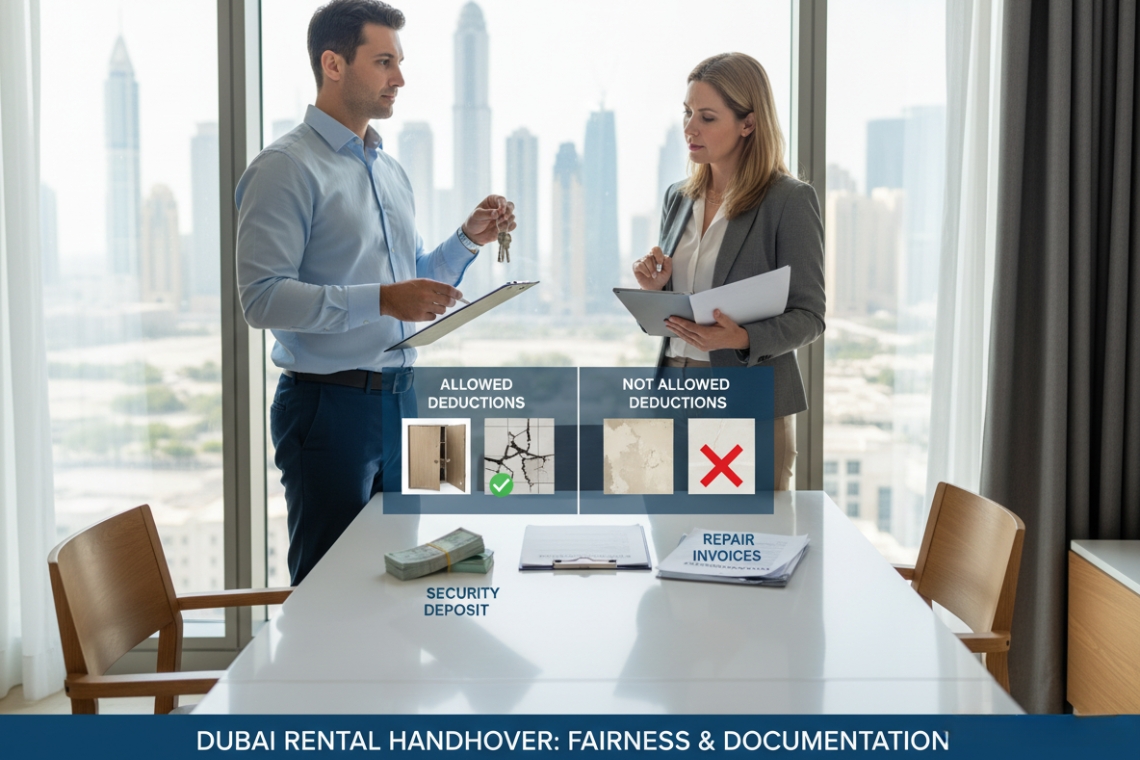
Deductions That Are Usually Considered Legal
The law will be in favor of the landlord when the deductions are supported by evidence, and they are directly related to the tenant's actions. The essential factors here are proof and proportionality.
Typical examples where deductions may be justified include:
- Physical damage that goes beyond everyday use
- Broken fixtures or fittings caused by misuse
- Appliances damaged due to negligence rather than age
- Missing items listed in the move-in inventory
In such instances, the landlords are supposed to present invoices or repair estimates. Deductions made without documentation are weak in legal terms- the fact that many professionals providing legal services in Dubai have raised.
What Landlords Cannot Deduct Under the Law
This is a point where most disputes begin and escalate. Many deductions tenants see are simply not allowed under Dubai rental regulations.
The tenant is not responsible to normal wear and tear. This incorporates things which occur naturally when one stays a year or longer at a home.
Landlords are generally not allowed to deduct for:
- Paint fading due to sunlight
- Light scuff marks on walls
- Worn flooring or carpets from regular use
- Aging fixtures that require replacement anyway
A Dubai property lawyer will generally determine whether the problem was caused by time, weather, or mere usage-in that case, the tenant is not liable.
The Importance of Condition Reports and Evidence
Paperwork is one thing that determines most of the disputes in deposit cases. Or the lack of it.
Usually, the tenants who are victorious in court cases possess straightforward evidence that reveals the condition of the unit during the handover. The landlords who are successful tend to rely on inspection reports that document the damage in quantifiable terms.
Helpful documentation includes:
- Signed move-in and move-out inspection reports
- Dated photos or videos
- Written communication confirming property condition
Legal consultants in Dubai use this material extensively when a dispute goes to a formal level requiring someone to build or defend a claim.
How Long Can a Landlord Hold the Deposit?
Dubai law does not establish a time limit, but it is required that deposits should be refunded within a decent time after handover. Practically 14-30 days is acceptable in most decisions on rental disputes, with the assumption that there is no actual damage evaluation pending.
A delay by a landlord with no explanation or continued change of reasons is a stronger case with the tenant. Just a single notice, checked by a law firm in Dubai, frequently suffices to move the situation ahead without the need to initiate a legal action.
Can Deductions Be Made Without Repair Proof?
Legally speaking, no. A landlord can’t just “estimate” damage and deduct money casually. Claims should be supported by receipts, quotations, or inspection findings.
This issue comes up frequently before dispute committees, and tenants often succeed when deductions are vague or unsupported. The tenants residing in Dubai are usually advised by their property lawyer in Dubai not to accept verbal explanation unless there is a written record.
What Tenants Should Do When Deductions Feel Unfair
When something doesn’t feel right, the worst move is staying silent. Addressing the issue early keeps options open.
Practical steps include:
- Asking for a written breakdown of deductions
- Requesting copies of repair invoices
- Comparing claims with the original inventory
- Responding formally rather than emotionally
If communication stalls, guidance from a Dubai advocates and legal consultant helps tenants decide whether negotiation or a formal complaint makes more sense.
Why Professional Guidance Often Makes a Difference
Security deposit disputes may involve small amounts, but they still follow legal procedures. Missed deadlines, weak documentation, or poorly worded complaints can cost tenants their case.
That is the main reason why a lot of people seeking UAE legal services to assess their case from the very beginning before it gets more complicated. Just a brief consultation can help to decide if a lawsuit is worth going after or it is better to be settled out of court.
Conclusion
The rental regulations in Dubai are not as unclear as many people think. A security deposit is not a surplus amount that a landlord can access, and the tenant is not liable for the normal wear and tear of the house in which he lives. The majority of issues do not arise due to the law being ambiguous- they arise over what actually counts as damage.
Usually, things don't escalate when the tenants are aware of their situation and tackle the problems at the initial stage. Keeping records, asking for elucidations, and speaking up at the right time can have a huge impact. It frequently results into less fighting, faster resolution, and substantially lower tension than attempting to sort everything out at the very last moment.
Need help with a rental deposit issue?
In case you are dealing with mysterious deductions or refund delays, Alqada Claims Recovery Services are here for you to clarify your legal situation and choose the most intelligent next move. Very often, the proper guidance given at the proper moment is enough to settle the issue in a right way.