

How Commercial Arbitration Works in Dubai: DIAC Rules & Enforcement
How Commercial Arbitration Works in Dubai: DIAC Rules & Enforcement Proceedings
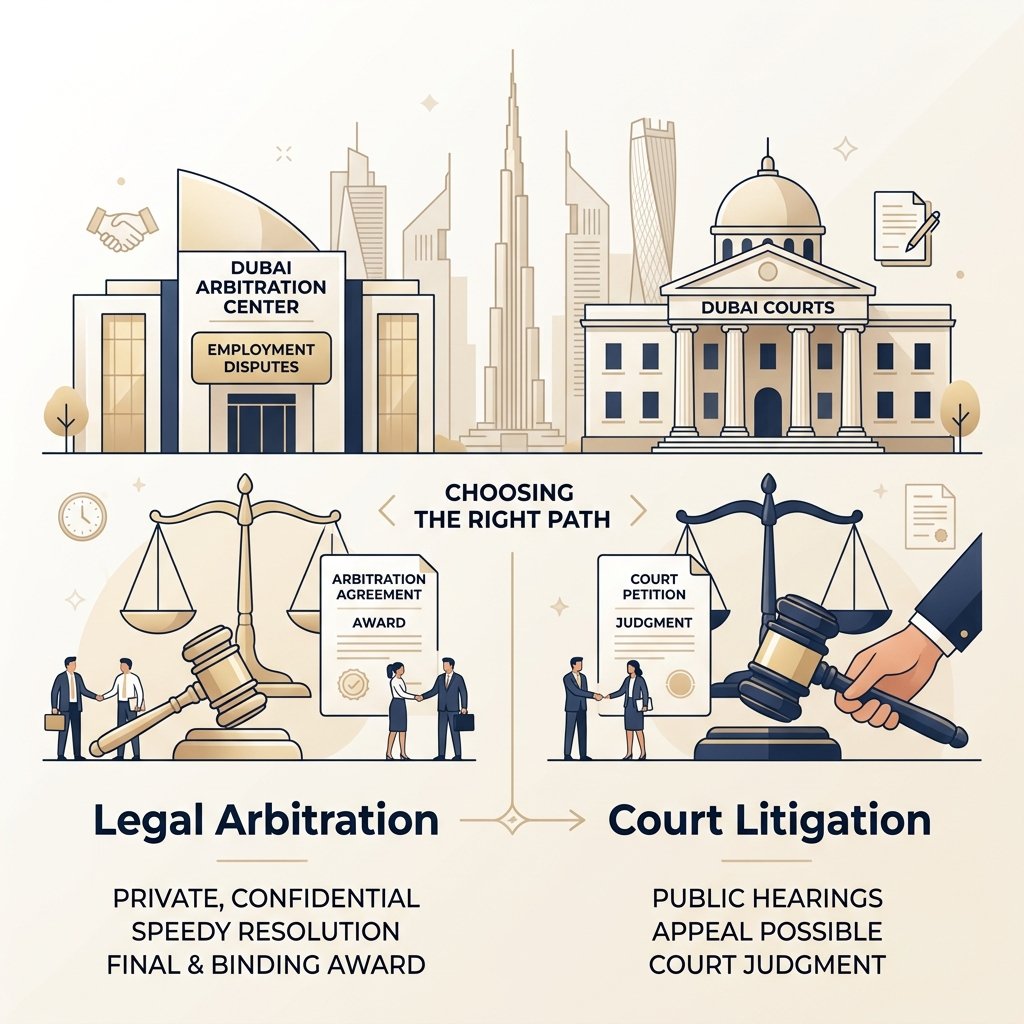
For corporate entities operating in the Middle East, commercial arbitration has become the preferred mechanism for resolving high-value construction, joint venture, real estate, and cross-border trade disputes. Governed by UAE Federal Law No. 6 of 2018 (the Federal Arbitration Law)—as modernized by Federal Decree-Law No. 15 of 2023—alongside the 2022 Dubai International Arbitration Centre (DIAC) Arbitration Rules, Dubai offers an internationally aligned, confidential, and efficient dispute resolution framework. Working with an experienced arbitration lawyer ensures that businesses navigate institutional rules, jurisdictional seat selection, and post-award court enforcement without procedural setbacks.
1. The Legal Framework: DIAC Rules 2022 & UAE Arbitration Law
Following Dubai Decree No. 34 of 2021, DIAC consolidated institutional arbitration in the Emirate and implemented the 2022 DIAC Arbitration Rules on 21 March 2022. Key structural features under the modern framework include:
- Default Seat in the DIFC: Under Article 20 of the 2022 DIAC Rules, if parties do not specify a legal seat in their arbitration agreement, the Dubai International Financial Centre (DIFC) serves as the initial default seat, granting parties access to common-law supervisory courts unless the tribunal determines otherwise.
- Strict Confidentiality: Under both the DIAC Rules and amended Article 33 of the Federal Arbitration Law, hearings, filings, and awards remain strictly confidential unless parties agree otherwise.
- Consolidation, Joinder & Expedited Tracks: Parties can consolidate multi-contract disputes, join third parties, apply for emergency interim relief, or utilize expedited proceedings where final awards are rendered within three months.
- Recoverability of Legal Fees: Unlike traditional onshore litigation, Article 36 of the 2022 DIAC Rules expressly empowers arbitral tribunals to award reasonable legal representation fees and arbitration costs to the prevailing party.
2. Step-by-Step Commercial Arbitration Procedure in Dubai
An institutional DIAC arbitration typically progresses through five structured stages:
- Step 1: Request for Arbitration: The Claimant submits a formal Request for Arbitration to DIAC alongside the registration fee, outlining the arbitration agreement, nature of the claim, relief sought, and arbitrator nomination.
- Step 2: Respondent’s Answer & Counterclaims: Within 30 days of notification (subject to a maximum 10-day extension), the Respondent files its Answer, jurisdictional objections, and any counterclaims.
- Step 3: Constitution of the Arbitral Tribunal: Depending on the contract, a sole arbitrator or a three-member panel is appointed and confirmed by the DIAC Arbitration Court, subject to strict impartiality rules under Article 10bis of the Federal Arbitration Law.
- Step 4: Pleadings, Evidence & Merits Hearing: Following a preliminary meeting, the tribunal establishes a procedural timetable for written memorials, factual witness statements, technical expert reports, and virtual or in-person evidentiary hearings.
- Step 5: Issuance of the Final Arbitral Award: The tribunal issues a reasoned, binding Final Award. Under the Federal Arbitration Law, awards are generally rendered within six months of the first procedural meeting, extendable by the tribunal or DIAC Arbitration Court.
3. Recognition and Enforcement of Arbitral Awards in Dubai
An arbitral award is final on the merits and cannot be appealed, though a party may apply to set it aside within 30 days on narrow statutory grounds (such as lack of valid arbitration agreement, due process violations, or public policy conflicts). To convert an award into compulsory payment:
- Onshore Dubai Court Ratification: Under Articles 52–57 of the Federal Arbitration Law, the winning party files a ratification petition directly before the Dubai Court of Appeal, which issues an execution order within a streamlined timeframe.
- DIFC Court Enforcement Conduit: Where the DIFC is the seat, the award is ratified by the DIFC Courts and can subsequently be executed onshore in Dubai via established judicial cooperation protocols.
- International Enforcement: Because the UAE is a signatory to the 1958 New York Convention, Dubai-seated arbitral awards are enforceable across more than 170 member jurisdictions worldwide.
Engaging leading arbitration firms in dubai ensures your arbitration clauses are properly drafted, third-party funding disclosures are managed, and awards are swiftly enforced through execution proceedings.
Resolve High-Stakes Commercial Disputes Through Arbitration
Whether you are drafting a multi-party commercial contract, initiating a DIAC claim, or enforcing a domestic or foreign arbitral award in the UAE, specialized legal representation protects your commercial interests. Alqada Law Firm represents corporate clients across DIAC, ADGM, DIFC, and international arbitral tribunals. Speak directly with our specialists through our legal consultancy services or visit our Contact Alqada Law Firm page to schedule a case evaluation.